
This is a practical guide for project managers, procurement leads, and operations teams in oil and gas, mining, and remote industrial sectors.
Choosing a modular vendor for a remote industrial project is not like buying office furniture. The wrong choice does not just mean a higher invoice. It can mean delayed commissioning, a building that does not meet site conditions, costly change orders mid-project, or a structure that cannot be relocated or expanded when your operation evolves.
The modular industry has grown fast, and so has the number of vendors in the space. Not all of them operate with the same level of transparency, certification, or field experience. Some are primarily dealers. Others are manufacturers. Some can engineer for Northern conditions. Others cannot.
This guide gives you the questions that separate vendors who can deliver from those who are figuring it out alongside you.
Why this matters – In O&G and mining, project timelines are tight and conditions are unforgiving. A vendor who has never built for -40 degrees Celsius, navigated spring road bans, or managed CSA certification in multiple provinces is a liability before the contract is even signed.
Certifications and Compliance
This is the first filter. If a vendor cannot answer these questions clearly and confidently, stop the conversation there.
Questions to ask:
- Are your buildings CSA A277 certified? Who is your Inspection Agency?
- Do you build to the National Building Code, or do you work within provincial variants?
- Can you provide documentation of inspections performed during manufacturing,?
- How do you handle permitting across provincial jurisdictions, particularly Alberta and BC?
- Do you have an in-house digital QA/QC Inspection process?
ROC Modular perspective
CSA A277 certification is not optional for serious industrial work. It means your building was inspected and certified at the factory, Ask for the certification documentation upfront, not after the quote.

Ensure the Factory has a strong track record
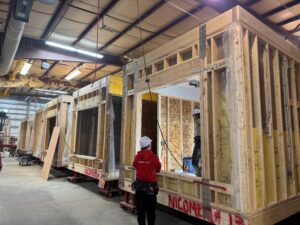
Whether you are working directly with the Factory or a Broker/Dealer, make sure the chosen factory is credible, has a strong track record and financially viable.. A manufacturer controls quality, timeline, and specifications. Working with a broker or dealer can provide a lot of value add by coordinating between you and a third-party factory, which can assist with the process. In many cases you can also work directly with the Factory.
Questions to ask:
- Do you manufacture your own buildings, or do you source from third-party fabricators?
- Where is your manufacturing facility located, and can we visit?
- Who is responsible for quality control during production?
- If there is a defect or specification issue discovered on site, who is accountable and what is the resolution process?
- What is your current production capacity and lead time?
ROC Modular perspective
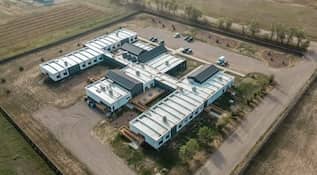
ROC Modular is a manufacturer, we also work with brokers and dealers. Our facility is in Southern Alberta. You can visit it. We build what we sell and we stand behind what leaves our floor.
Remote Site and Climate Experience
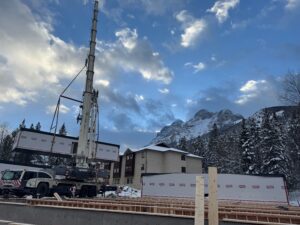
Building for a downtown Calgary office park and building for a drill camp 200 kilometres north of Fort McMurray are completely different exercises. You want a vendor who has done the second one, many times, and still has the relationship scars and lessons from it.
Questions to ask:
- What is the coldest climate you have designed and built for? What was the thermal spec?
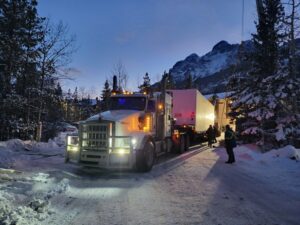
- Have you delivered to remote sites accessible only by seasonal road or ice road? How did you manage the logistics?
- How do you design HVAC systems for extreme cold zones, including winterization and freeze protection?
- What utility integration options do you support: grid-tied, generator, solar-hybrid?
- How do you handle foundation design for challenging or permafrost terrain?
- What is your approach to spring road bans? Do you proactively plan delivery schedules around them?
ROC Modular perspective
Spring road bans in Alberta and BC can shut down access to remote sites for weeks. A vendor who does not raise this topic during project planning is a vendor who has not done enough remote work. It should be part of every early conversation.
Flexibility: Relocation, Expansion, and Reconfiguration
Operations change. Head counts shift. Projects move through phases. A modular building that cannot adapt is not delivering on the core value proposition of modular construction.
Questions to ask:
- Are your buildings designed to be relocated? What does that process look like and what does it cost?
- Can individual modules be added or removed to expand or contract the footprint?
- What is the structural lifespan of your buildings, and how many relocations can a unit typically handle?
- Do you offer refurbishment services for aging fleet units?
- Can you provide examples of buildings you have built, relocated, and repurposed for different uses?
ROC Modular perspective
We have taken drill camp infrastructure and repurposed it into affordable housing. Flexibility is not a marketing line for us. It is an engineering decision made at the design stage, and it only works if the structure was built to handle it.
Project Management and Communication
A well-built modular building delivered with poor communication is still a project management headache. Get clarity on how this vendor operates, who your point of contact is, and what visibility you will have during production.
Questions to ask:
- Who is my single point of contact from design through delivery?
- How do you keep clients updated during the manufacturing phase?
- What is your change order process? How are changes priced and documented?
- What is your site prep checklist? Who is responsible for ensuring site readiness?
- What does your commissioning process look like on delivery day?
- What warranty do you offer, and who handles warranty claims?
References and Proven Track Record
Any vendor can show renders. Ask for references from projects that match your conditions, your industry, and your scale.
Questions to ask:
- Can you provide references from O&G or mining clients with projects similar to mine?
- What is your largest completed project, and what were the site conditions?
- Have you worked with clients in my region or province before?
- What has gone wrong on a past project, and how did you resolve it?
That last question is important. A vendor who claims nothing has ever gone wrong is either inexperienced or not being honest with you. The right answer shows accountability and problem-solving, not a flawless record.
The Bigger Picture
Modular construction at its best is faster, more cost-controlled, and more adaptable than conventional site-built construction. But that is only true if the vendor you choose has the manufacturing capability, the engineering experience, and the operational transparency to actually deliver it.
The questions in this guide are not adversarial. They are the baseline for a productive working relationship. A vendor who welcomes them is a vendor you can trust. A vendor who deflects them is telling you something important before any money changes hands.
Ready to have this conversation?
ROC Modular specializes in industrial and commercial modular buildings for O&G, mining, and remote site applications across Western Canada. We welcome every question in this guide, and we will answer them straight.
Contact Holly Turnpenny to discuss your next project.