

Build Canada Homes has just become a Crown corporation.
On June 18, Bill C-20, the Build Canada Homes Act, received Royal Assent. Build Canada Homes (BCH) now has the legislative foundation to operate with the autonomy, land access, and financing tools it needs to deliver housing at national scale. Some governance steps remain before it’s fully operational later this year, but the direction is set, and it’s the direction we’ve been building toward.
What Changed
BCH launched in September 2025 as a special operating agency. Royal Assent moves it toward full Crown corporation status, with the power to own, develop, transfer, and finance property directly. It also opens the door for BCH to take on land holdings from Canada Lands Company, putting development-ready federal land directly into the pipeline.
BCH isn’t waiting on this legislation to show results. Six Direct-Build projects are already underway. Partnerships are in place across provinces, territories, municipalities, and Indigenous communities, representing more than 11,000 homes underway or nearing construction (up from 7,500 homes reported in February).
“With Royal Assent of the Build Canada Homes Act, we’re strengthening how we build more homes, faster for Canadians who need it most. Build Canada Homes is already delivering, and this legislation gives it the tools to go further and scale up results across the country.”
– The Honourable Gregor Robertson, Minister of Housing and Infrastructure
This is written into law. A Crown corporation built to move fast, with the legal standing to back it up.
Why this Matters at ROC Modular
Faster. Lower cost. No compromise on quality. That’s the mandate behind Build Canada Homes, and it’s the same mandate we’ve been operating under for years.
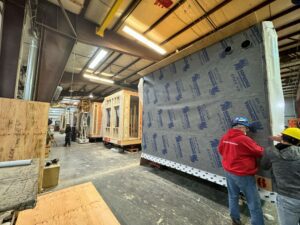
Site-built housing runs into the same obstacles every time: trades shortages, weather delays, sequential phases that stall the moment one trade falls behind. Modular removes those obstacles. Site work and module fabrication happen in parallel, under factory conditions, with quality control built into every stage instead of inspected after the fact. When a federal Crown corporation is structured around building homes faster, builders who can prove that speed are the ones who get the call.
BCH has also signaled a clear preference for Canadian materials, including steel, mass timber, and softwood lumber, through its Build Canada Homes program. ROC builds on Western Canadian supply chains. That’s an advantage built in before a single bid goes out.
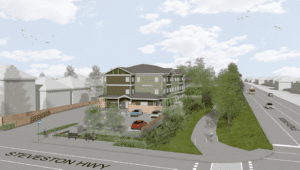
We’ve already proven this model works. In Richmond, BC, our approach to modular construction delivered 25 supportive housing units for vulnerable populations, with site development and fabrication running side by side to compress the timeline. That’s not a hypothetical. That’s the track record BCH is now scaling nationally.
View our Steveston RHI Project
Where this Goes Next
We’re looking at a real opportunity with a real timeline.
BCH has already published RFIs and RFQs aimed specifically at modular and mass timber construction. Leadership and governance still need to land before procurement moves at full speed, and that’s expected to happen later this year.
Here’s what we’re watching:
- Governance and leadership appointments through the summer
- New RFQ and RFP activity tied to modular and MMC suppliers
- How the Canada Lands Company land transfer plays out
- Provincial and territorial partners attaching projects to BCH’s framework
Canada needs builders who are ready now, not years from now. We’ve spent years building the systems, the supply chains, and the track record this moment is calling for.